
Honor Guard Airmen save cadet who collapsed from heat exhaustion
In a swift demonstration of readiness and leadership, the 42nd Air Base Wing Honor Guard sprang into action when an Air Force Reserve Officer Training Corps cadet collapsed from apparent heat exhaustion near the honor guard hangar at approximately 4:30 p.m. on June 20, 2025.
Cadets were returning from the dinning facility in formation when Master Sgt. Kiefer Colmer, 42nd Air Base Wing Honor Guard superintendent, witnessed the incident and moved quickly to assist.
“A lot of the cadets were trying to help her by fanning her with hats and pouring water on her, but you could tell she was in rough shape,” Colmer said. “She was borderline unconscious and barely responsive. That’s when training kicks in.”
Colmer immediately alerted his commander and retrieved an ice vest with assistance from two team members. The vest was applied to the cadet, who began to recover moments later.
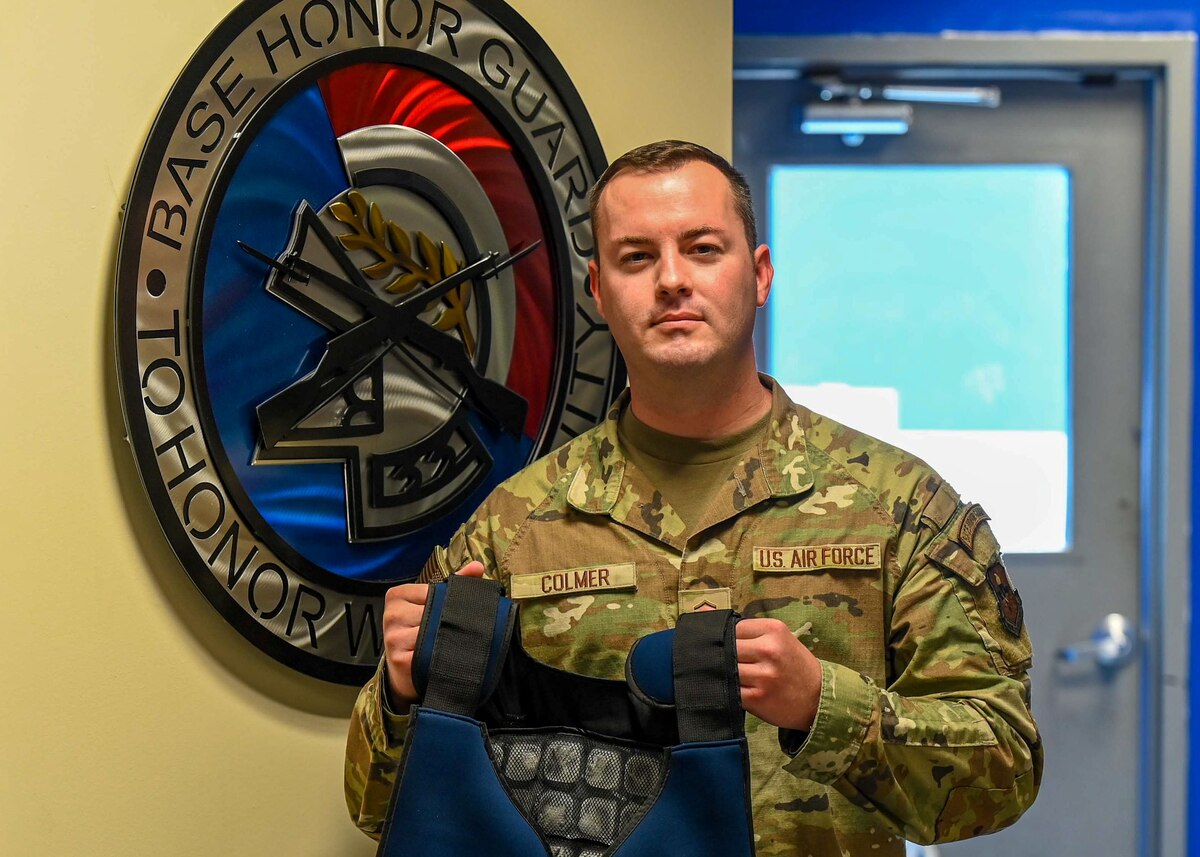
“When she fell out, Sgt. Colmer had just pulled up, and they brought her in here to cool down. It was quick thinking by Sgt. Colmer,” said Christine Bushby, 42nd Force Support Squadron mortuary readiness and plans specialist. “They got the ice vest on her and started getting fluids into her. It was her first week here, and she wasn’t used to the humidity. She was in my office for about an hour while they monitored her and helped her recover.”
The team moved the cadet to a shaded area inside the hangar and called for medical support.
“The goal was to stabilize her, cool her down, get fluids in, and keep her alert until medics arrived,” said Colmer. "Once she was inside, we made the call to emergency services and kept monitoring her closely.”
Emergency personnel from the base medical team and fire department took note of the intervention.
“One of the first things the medics asked was where we got the ice vest,” Colmer said. “The cadet even pointed at me and said, ‘He gave it to me, and it helped tremendously.’ That was powerful.”
According to Colmer, the idea for the ice vest originated as a homegrown solution by the honor guard to combat the extreme heat of Alabama summers. Its effectiveness has led to wider adoption across the base.
“Since we started using them, Security Forces has adopted the idea,” Colmer said. “It’s one thing to come up with a good idea, it’s another to equip it properly. The key is having the right materials: a freezer for quick reuse and enough vests in rotation to keep them cold. It’s not just about owning the gear it’s about sustaining the process.”
Colmer believes the ROTC program could benefit from implementing similar heat mitigation tools, especially during summer training cycles at Maxwell.
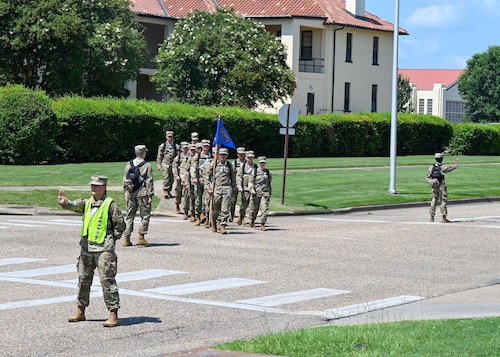
“With black flag conditions happening before 10 a.m. some days, the risk is real,” Colmer said. “Having just a few vests on hand could prevent a training stoppage or, more importantly, a serious medical event.”
Although the honor guard had no formal role in ROTC’s operations that day, Colmer emphasized the importance of being ready for the unexpected.
“It was the right place, right time,” he said. “We didn’t plan for this, but that’s exactly why readiness matters. We train constantly for situations that may never happen until they do.”
Colmer noted the larger takeaway is that proactive leadership and initiative, regardless of job title, can make a life-saving difference.
“It’s amazing what can be accomplished when no one cares who gets the credit,” he said. “In this case, the cadet is safe, and now there’s momentum for a heat safety solution that could help dozens more. That’s the win.”
Bushby echoed that sentiment, noting how a single idea has grown into something bigger than expected.
“It really showed how something that started as just an idea getting ice vests to the honor guard has now spread across base,” Bushby said. “Now Security Forces is using the vests and ROTC is considering using them too; it’s had such a bigger impact than we imagined.”
